BRITAIN BENEATH · GUIDE · 8 OCTOBER 2026
York’s Cold War Bunker: A Workplace Built for Nuclear War
About sixty people were expected to work inside York’s bunker after a nuclear attack. They needed reports, maps, power, meals and beds—not just thick concrete walls.
Based on published records and visitor information. We have not visited these places.
AI-generated illustration
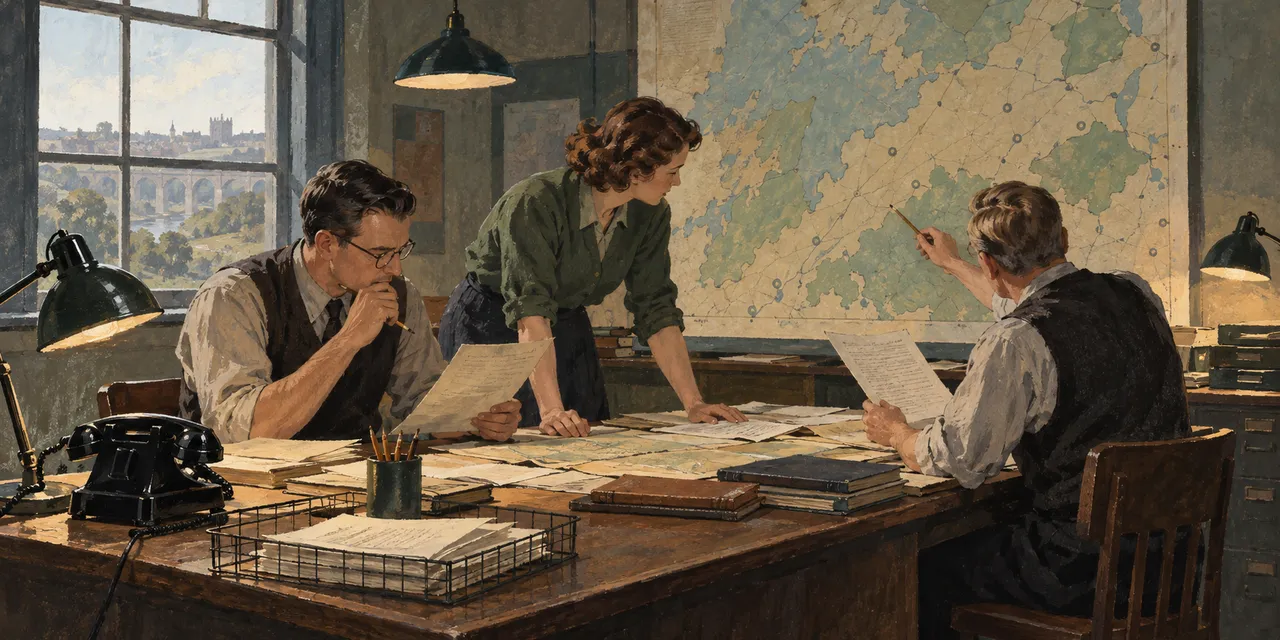
An imagined room shows staff comparing reports from different places. It is not an exact view of York’s rooms or equipment.
AI-generated for Britain Beneath · 2026-09-27. Resized and converted to WebP for faster loading; no cropping.
Where the reports would arrive
York’s Cold War bunker was built for about sixty people to keep working during a nuclear attack. They were meant to gather instrument readings from crews in small underground monitoring rooms, compare them and estimate where explosions had happened. Their findings would go to civil and military authorities.
The bunker opened in December 1961 as the Royal Observer Corps’ No.20 Group headquarters. It served most of Yorkshire until the Corps stood down in 1991.
The wider network included more than 1,500 underground posts built across Britain between 1957 and 1965. Local crews supplied readings; the headquarters brought reports together. York needed rooms for that work, along with food, sleep, filtered air and emergency power.
- Historic England — Cold War period Royal Observer Corps Group Headquarters, Howe Hill ↗ · reviewed 2026-09-13
Rooms for a long shift
Beds, a kitchen and a canteen supported staff working in the partly buried bunker. Air filters and emergency power were intended to keep it usable when conditions outside were dangerous.
Rooms at the entrance let people remove harmful material from their clothes and bodies before going farther inside.
In the operations room, reports from up to 35 posts could be marked on maps. Staff could use several readings to estimate where an explosion happened and how strong it was. A device called AWDREY was installed to detect signs of a nuclear blast and sound an alarm. The plan was never tested in a full nuclear attack.
- Historic England — Cold War period Royal Observer Corps Group Headquarters, Howe Hill ↗ · reviewed 2026-09-13
The limits of the plan
Staff recorded readings on map boards and used message systems to pass their findings onwards. Receiving a report was only the first stage: several readings had to be compared before estimating what had happened.
There were limits. Historic England explains that more powerful and more numerous weapons raised doubts about how useful the network would be in a full attack. The bunker shows both the effort to prepare and the difficulty of planning for a threat that kept changing.
- Historic England — Cold War period Royal Observer Corps Group Headquarters, Howe Hill ↗ · reviewed 2026-09-13
Visiting the bunker
English Heritage now runs guided visits. Its visitor page describes the preserved control room, original monitoring equipment and rooms for sleep, messages and power. The tour links the rooms to the work planned in them.
The operator lists booked tours on Fridays to Sundays and bank holidays. We checked those arrangements online on 22 September 2026. Check the live calendar and reserve a place before travelling.
The ticket covers this bunker, not the smaller posts elsewhere on our map. At York, you can see the rooms where staff were meant to eat, sleep and work while gathering reports of a nuclear attack.
- Historic England — Cold War period Royal Observer Corps Group Headquarters, Howe Hill ↗ · reviewed 2026-09-13
- English Heritage — York Cold War Bunker ↗ · reviewed 2026-09-22
Sources and further reading
Written from the linked official records, checked on 22 September 2026. We have not visited these places. Check that the people running a place say it is open before planning entry. Map points are not visitor entrances. Check current visitor details before travelling. The 1 place records below give more information.
You can follow the links to read the original sources. Sources and permissions.