BRITAIN BENEATH · GUIDE · 8 OCTOBER 2026
Willesborough Windmill: The Sails Were Not Its Only Power
Willesborough added steam power in 1872, then an oil engine and an electric motor. Milling could continue when the sails did not have enough wind.
Based on published records and visitor information. We have not visited these places.
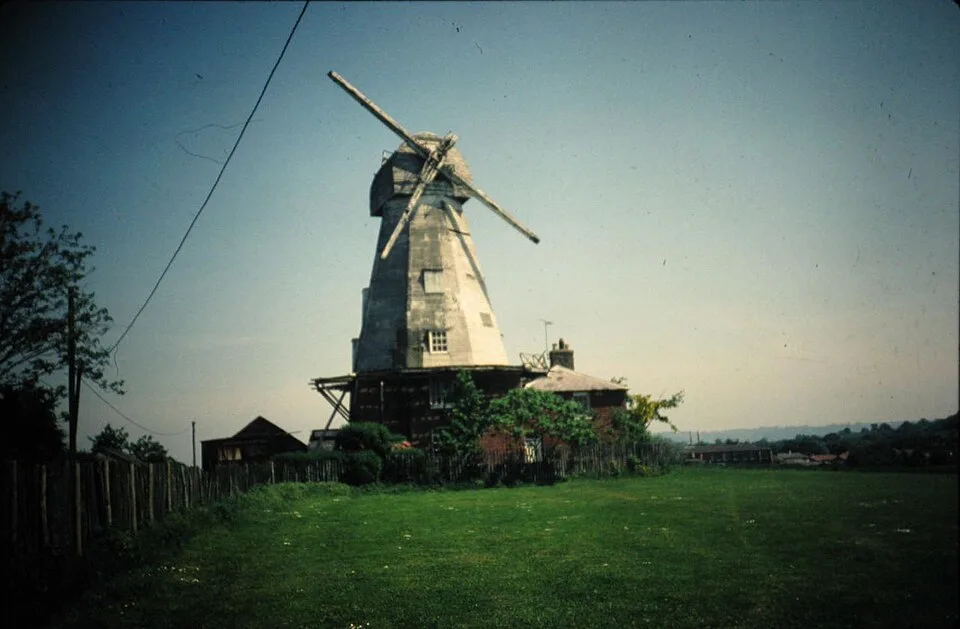
Willesborough Windmill in May 1982, before later council repairs. This is a scanned 35mm slide, not a current view.
Willesborough Windmill by M J Roots · CC BY-SA 2.0. Wikimedia rendition converted to WebP and resized where needed; no cropping or retouching. Photographic derivatives remain under the stated licence.

The wind was not always enough
Willesborough Windmill gained a steam engine in 1872. Later an oil engine and an electric motor gave millers more ways to drive the machinery when wind was insufficient. Ashford Museum records these changes to the mill’s power supply.
The sails remained part of the building, but they no longer explain all of its working history. Engines could power the grain-processing machines inside the mill without turning the sails, and its products changed as the business moved towards animal feed.
The extra engine preserved today is a replacement of a similar type, not the original Campbell engine. A tour can explain that distinction, along with the machinery kept or restored from earlier stages.
- Willesborough Windmill heritage history ↗ · reviewed 2026-10-07
- Historic England — Willesborough Windmill ↗ · reviewed 2026-09-13
The mill changed with the business
Historic England describes an eight-sided timber body on a two-storey brick base. A platform runs around it, with a house beside it. This type is called a smock mill. Its main body stays still, while the cap can turn to face the sails into the wind.
Shafts and gears transfer power to machinery on the mill’s different floors. The same workplace could use its sails or an added engine to drive the grain-processing equipment.
The mill later produced animal feed and used engines as well as wind power. The replacement engine helps explain that part of its work. It is one of the details a guide can distinguish from the surviving older machinery.
Sources disagree about the building date. Historic England gives 1868, while Ashford Museum gives 1869. We have not resolved that one-year difference, so we give both accounts.
- Historic England — Willesborough Windmill ↗ · reviewed 2026-09-13
- Willesborough Windmill heritage history ↗ · reviewed 2026-10-07
Booking a mill tour
The operator lists guided tours and seasonal opening. Its 2026 calendar lists weekend and bank-holiday opening into October, with exceptions for weddings and other events. Check the day and last-tour time before travelling.
A café or barn visit is separate from a mill tour. If you want to see the machines, confirm which ticket or session includes it. Ask about stairs and your access needs before booking.
A preserved engine does not guarantee a live demonstration. Guides can explain what is original, restored or replaced, and what will run that day. We have not tested the visitor route ourselves.
On a tour, ask how the engines drove the machinery and which parts are original or replacements. Those details explain how the mill continued working as its power sources and products changed.
- Willesborough Windmill — 2026 visitor programme ↗ · reviewed 2026-09-13
- Willesborough Windmill 2026 visits ↗ · reviewed 2026-10-07
Sources and further reading
Based on the linked official heritage records and visitor pages. We have not visited or confirmed access directly. Older descriptions and photos may not reflect today’s condition. Check current official visitor advice before travelling. The 1 place records below give more information.
- Willesborough Windmill — 1184561
You can follow the links to read the original sources. Sources and permissions.