BRITAIN BENEATH · GUIDE · 8 OCTOBER 2026
Glasgow’s South Rotunda: The Entrance to a Crossing Under the Clyde
The domed South Rotunda was the entrance to tunnels under the Clyde. Vehicles were lowered from street level; pedestrians had a separate passage. The building is now an office.
Based on published records and visitor information. We have not visited these places.
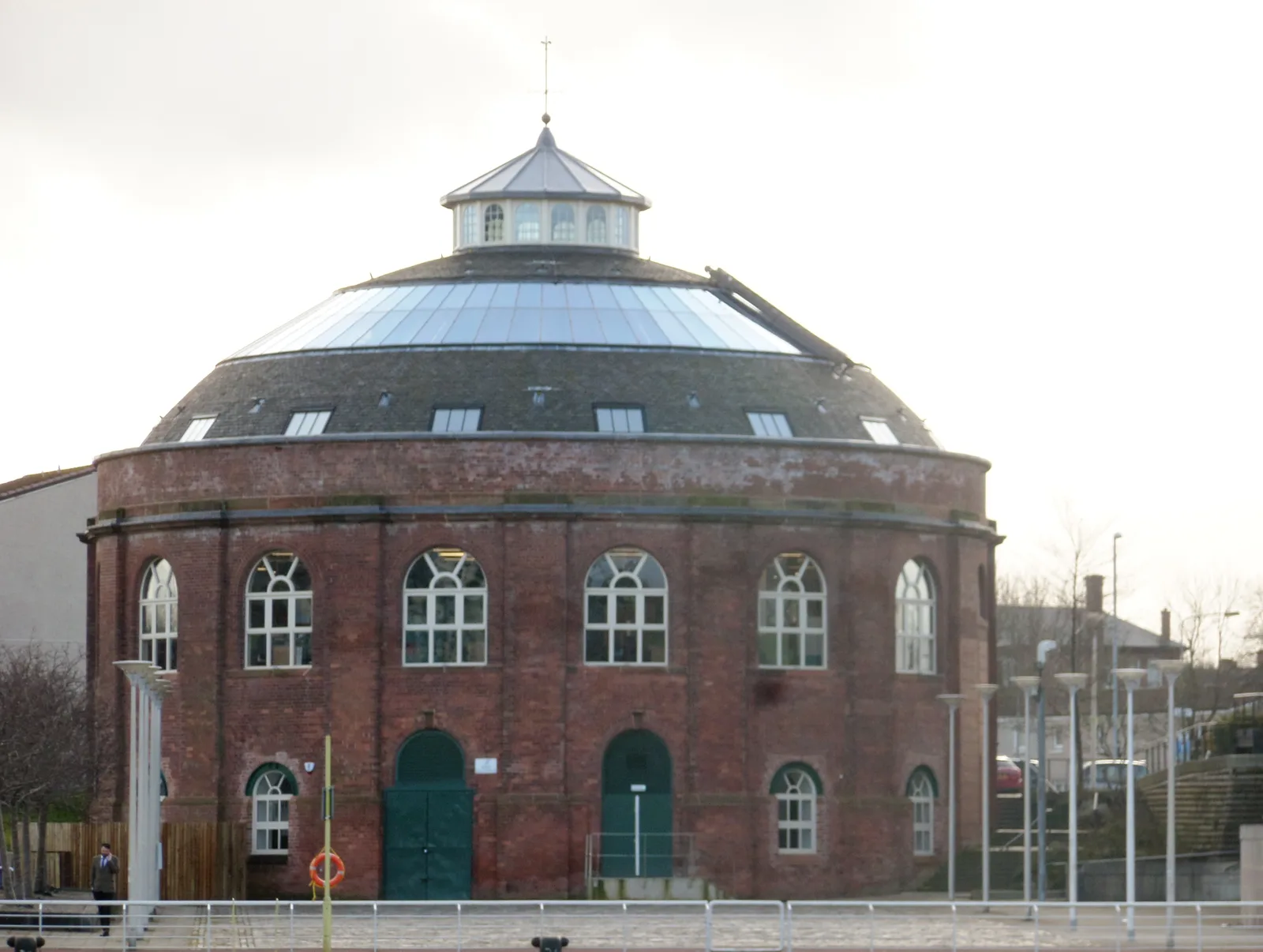
The South Rotunda in February 2018, after repairs. Its small roof turret and weather vane were missing in the older heritage account.
South Rotunda, Glasgow Harbour Tunnels, Glasgow by Rosser1954 · CC BY-SA 4.0. Resized and converted to WebP for faster loading; no cropping. Adapted image files remain under CC BY-SA 4.0.

The crossing below the dome
Glasgow’s South Rotunda is a round entrance building for an old crossing beneath the Clyde. A shaft beneath the dome led to three parallel tunnels: two for vehicles and one for pedestrians. A matching building stood on the north bank.
Vehicles were lowered from street level to the tunnels and raised again at the other end. Pedestrians used a separate passage and could reach it by stairs. The southern entrance was designed in 1888 and built between 1890 and 1895, with brick walls, arched windows and a steel-framed dome.
The vehicle tunnels closed in 1940. The South Rotunda remained, and later restoration turned it into offices. The building’s new use has not reopened the old river crossing to visitors.
- 100 Govan Road, Glasgow Harbour Tunnel shaft and rotunda (LB33528) ↗ · reviewed 2026-09-28
- 28 Tunnel Street, Glasgow Harbour Tunnel shaft and rotunda (LB33203) ↗ · reviewed 2026-09-28
- Our story: the South Rotunda ↗ · reviewed 2026-09-28
- Building conservation: South Rotunda in Glasgow ↗ · reviewed 2026-09-28
Closures and new owners
The tunnel offered a crossing beneath a busy river, but its company lost money. It closed in 1907 and reopened in 1912. Glasgow Corporation bought it in 1926. Historic Environment Scotland records the vehicle tunnels closing in 1940.
The rotunda still marks where the crossing began. Its survival does not mean the tunnels can be used now. The dome explains an old route below ground without making the shaft a place to enter.
- 100 Govan Road, Glasgow Harbour Tunnel shaft and rotunda (LB33528) ↗ · reviewed 2026-09-28
The roof was repaired
Malin Group bought the South Rotunda in 2015 and restored it as its Glasgow headquarters. The architect records repairs to brick, stone and roof, plus new windows. A small replica roof turret and weather vane were added too.
The repaired turret and weather vane appear in the February 2018 photo. An older listing described them as missing. The dates explain the difference: the photo was taken after restoration.
The building now serves as an occupied office. Restoring the dome did not reopen the tunnel. It gave the old entrance another role above ground.
- 100 Govan Road, Glasgow Harbour Tunnel shaft and rotunda (LB33528) ↗ · reviewed 2026-09-28
- Our story: the South Rotunda ↗ · reviewed 2026-09-28
- Building conservation: South Rotunda in Glasgow ↗ · reviewed 2026-09-28
Seeing the building from outside
You may be able to see the outside from public space beside the Clyde. We have not inspected current paths, views or surfaces. Use established routes and follow signs and barriers.
Malin Group names the building as its headquarters. It does not advertise normal visitor entry. We have found no published public access to the old harbour tunnels. Do not enter office grounds or look for a way into shafts or passages.
From an authorised public viewpoint, the rotunda marks the entrance to the former crossing. Its office use belongs to a later period. The old river tunnels have no confirmed public opening.
- Our story: the South Rotunda ↗ · reviewed 2026-09-28
- 100 Govan Road, Glasgow Harbour Tunnel shaft and rotunda (LB33528) ↗ · reviewed 2026-09-28
Sources and further reading
Historic Environment Scotland records, Malin Group and architect G.D. Lodge were checked on 28 September 2026. We have not visited, inspected inside or checked directly with staff. The old note about missing roof details comes from before restoration. The building is an office. We have not confirmed public entry to the tunnels. Photo rights are credited beside the image. The 1 place records below give more information.
You can follow the links to read the original sources. Sources and permissions.