BRITAIN BENEATH · GUIDE · 8 OCTOBER 2026
Swingate Radar Station: How Crews Kept Working After a Raid
A raid damaged Swingate in August 1940, but crews used emergency equipment to keep the radar station working. A later underground post prepared for nuclear war.
Based on published records and visitor information. We have not visited these places.
AI-generated illustration
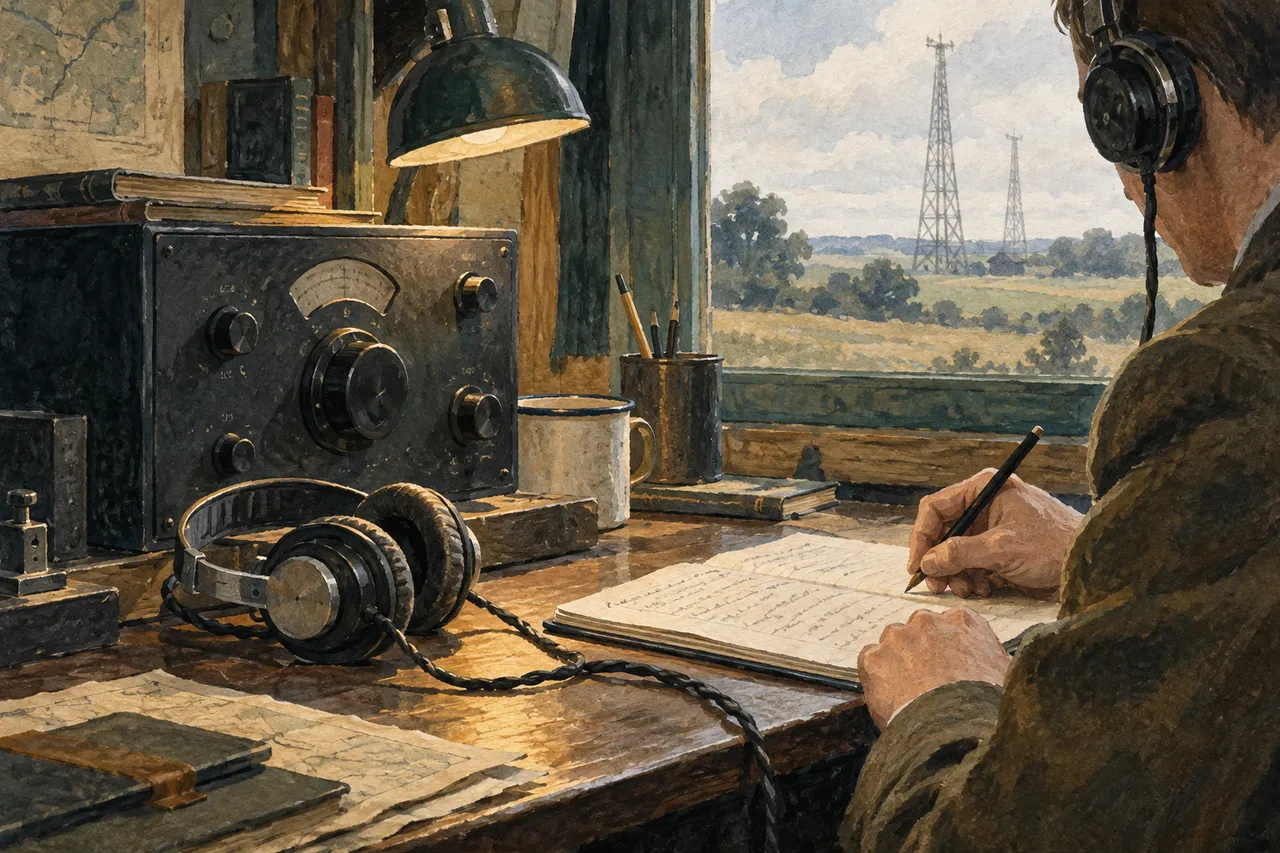
An imagined radar workplace shows the task of gathering information. The equipment and tower are not exact copies of Swingate.
AI-generated for Britain Beneath · 2026-09-27. Resized and converted to WebP for faster loading; no cropping.
A warning station before the war
A raid in August 1940 damaged a tower and huts at Swingate. Crews used emergency equipment to keep the radar station working, according to Historic England. Radar was used to detect aircraft and estimate their positions. The station continued sending that information despite the damage.
Construction had begun in 1936 and finished in 1938. Swingate was one of the early Chain Home stations, using radar to detect aircraft and pass their positions into the air-defence network.
The listed receiver site covers part of that larger station: a building, bases for three towers and a small identification room. Later, an underground nuclear-monitoring post was built within it. The shared ground held two different warning systems at different times.
- Historic England — Swingate radar receiver site and monitoring post ↗ · reviewed 2026-09-22
The attack did not stop it
Wooden receiver towers once stood around the main building. They have gone, but three sets of concrete bases remain. Cables ran through a central pit to rooms where staff handled the signals. Earth and strong walls gave some protection.
During an attack in August 1940, a tower and huts were damaged. Staff used emergency equipment to continue the radar station’s work. The warning system remained in operation despite the damage.
The station also used equipment to distinguish friendly aircraft from enemy aircraft. The small identification room in the listing belongs to that part of its work.
- Historic England — Swingate radar receiver site and monitoring post ↗ · reviewed 2026-09-22
A new job below ground
Historic England says the radar station stayed in use until 1955. Other equipment and communications work followed. In 1962, a Royal Observer Corps post was built underground inside the old receiver site. It worked until 1968.
The later crew monitored the effects of nuclear weapons rather than detecting aircraft. Historic England describes a small concrete post with an entrance hatch, an underground room and surviving fittings.
- Historic England — Swingate radar receiver site and monitoring post ↗ · reviewed 2026-09-22
What the records show
The detailed record describes an empty, damaged receiver building, tower bases, the identification room and the monitoring post. Those condition details come from the inspection behind the record. We have not checked their condition today.
The listing also mentions features elsewhere in the larger station. A map point for the receiver area does not cover everything at Swingate.
Public entry is unconfirmed, and the land is described as farmed. Use the linked records or a clearly authorised viewpoint. Heritage protection gives no permission to enter the buildings or land.
- Historic England — Swingate radar receiver site and monitoring post ↗ · reviewed 2026-09-22
Sources and further reading
Written from the linked official records, checked on 22 September 2026. We have not visited these places. Check that the people running a place say it is open before planning entry. Map points are not visitor entrances. Check current visitor details before travelling. The 1 place records below give more information.
You can follow the links to read the original sources. Sources and permissions.