BRITAIN BENEATH · GUIDE · 8 OCTOBER 2026
Torbanehill: The Lost Pits Behind Scotland’s Early Oil Industry
Coal from the Torbanehill mines near Bathgate supplied an early oil industry. The surface buildings at one mine have gone, but museum accounts and an old plan help explain the work once done there.
Based on published records and visitor information. We have not visited these places.
AI-generated illustration
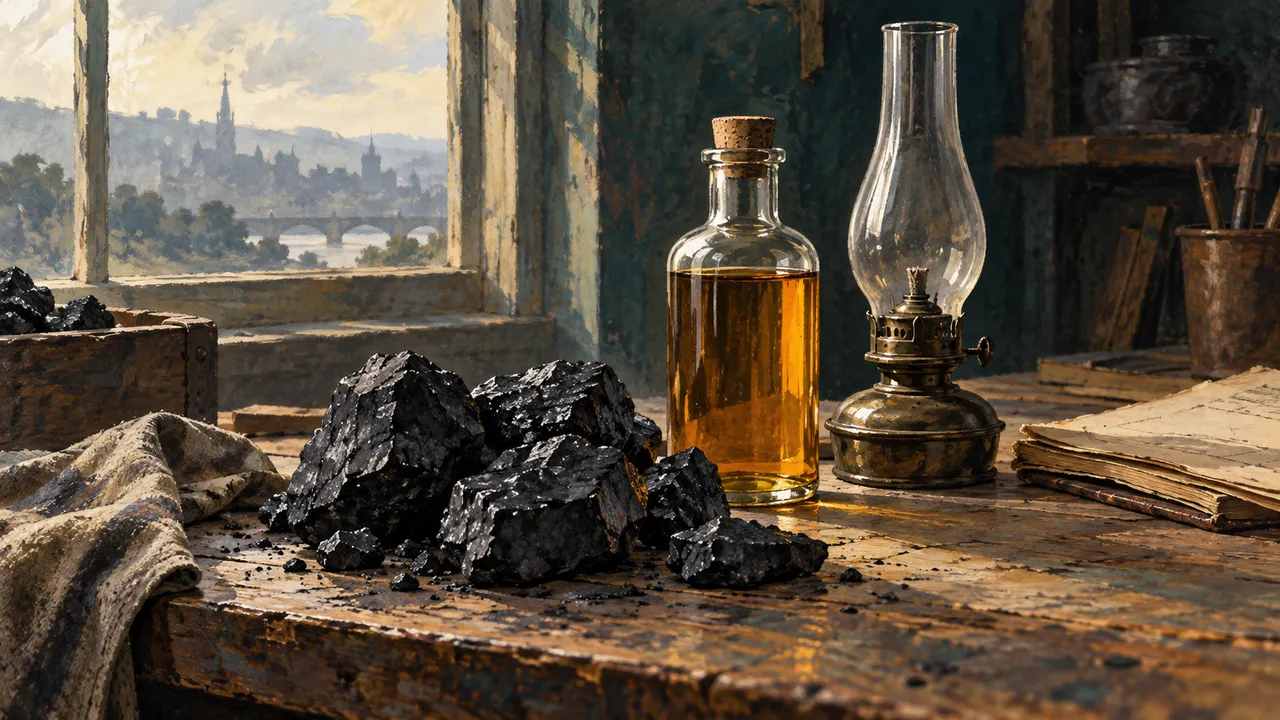
Imagined coal and oil objects show the link between mining and fuel for lamps. They are not museum objects or proof of remains at Torbanehill.
AI-generated for Britain Beneath · 2026-09-27. Resized and converted to WebP for faster loading; no cropping.
Turning coal into oil
In September 1852, the Falkirk Herald reported on works near Bathgate where Boghead coal was being turned into oil and paraffin. Its account mentioned James Young’s 1850 patent. The Museum of the Scottish Shale Oil Industry has published the report, describing an early stage of Scotland’s oil industry.
The Torbanehill mines, also called pits, supplied the coal. At No.3, little of that workplace can now be followed above ground: the museum says later open-pit mining removed its surface remains around 1990.
The evidence survives elsewhere. A mine plan records numbered pits and workings; museum accounts explain what different pits supplied and what traces remained. Together, they let us follow an industry whose early buildings have disappeared.
- Bathgate oil works — Falkirk Herald, 9 September 1852 ↗ · reviewed 2026-09-13
- Historic Environment Scotland — Torbanehill Coal Pit No.3, 100017 ↗ · reviewed 2026-09-13
- Scottish Shale — Torbanehill No.3 pit ↗ · reviewed 2026-09-13
The lost buildings at No.3
Torbanehill had several numbered pits. The Historic Environment Scotland record for No.3 describes coal mining, ironstone mining and a tramway. The pit was part of a larger mining operation.
The shale museum dates its opening to around 1852. The closing date is uncertain. It says open-pit mining around 1990 removed the remains above ground. There is no preserved pithead to expect here.
- Historic Environment Scotland — Torbanehill Coal Pit No.3, 100017 ↗ · reviewed 2026-09-13
- Scottish Shale — Torbanehill No.3 pit ↗ · reviewed 2026-09-13
A plan that changed with the mines
National Records of Scotland holds a plan of Torbanehill’s mines, listed as RHP420. Its catalogue describes numbered pits, test holes and workings underground. They belonged to a larger operation.
The plan was drawn in 1852 and updated with details of mining from 1861 to 1870. The archive catalogue records those additions. They show that the document changed as the mines developed, rather than describing only one moment in their history.
We have read the catalogue, not the plan itself. Ask the archive about viewing its digital image. “Open” in an archive list means you can research the document. It does not mean the land is open to visitors.
- National Records of Scotland — Torbanehill mineral workings, RHP420 ↗ · reviewed 2026-09-13
What No.1 left behind
No.1 pit left different traces. The museum describes a heap of mining waste beside Half Loaf Pond. Such a heap is known locally as a bing. The account also describes ground sinking and later landscaping.
Those are recorded traces of No.1, not evidence that buildings survived at No.3. Current land access needs a separate check, and neither pit is a confirmed underground visitor site.
- Scottish Shale — Torbanehill No.1 pit ↗ · reviewed 2026-09-13
- Scottish Shale — Torbanehill No.3 pit ↗ · reviewed 2026-09-13
Museums that tell the story
Almond Valley holds Scotland’s Shale Oil Industry Collection. Its museum tells the story of the industry and the communities around it. Check current displays, entry and opening times before travelling.
For the wider coal story, National Mining Museum Scotland is at Lady Victoria Colliery in Newtongrange. Exhibitions cover mining and family life. Tours include the pithead and a recreated coalway and coalface.
Those displays are recreations. Visitors do not descend into the old mine. Check tour bookings and dress for outdoor areas. These museums are separate destinations from the Torbanehill pits.
- Almond Valley — heritage and history ↗ · reviewed 2026-09-13
- National Mining Museum Scotland — visiting ↗ · reviewed 2026-09-13
- National Mining Museum Scotland — visit tickets ↗ · reviewed 2026-09-13
A lost pit, not a visitor entrance
We have not confirmed public access to Torbanehill No.3 or visited it. The map marks a historic location where the museum says the surface remains have gone.
For research, start with the linked museum and archive records. For a day out, choose a museum with clear opening details. The pits may be difficult to recognise now, but the collection at Almond Valley explains the industry they helped supply.
- Scottish Shale — Torbanehill No.3 pit ↗ · reviewed 2026-09-13
- Historic Environment Scotland — Torbanehill Coal Pit No.3, 100017 ↗ · reviewed 2026-09-13
Sources and further reading
Written using the sources linked above. Information checked on 13 September 2026. We have not visited or confirmed visitor arrangements directly with staff. Check the official visitor details before travelling. The 1 place records below give more information.
- Torbanehill Coal Pit No.3 — 100017
You can follow the links to read the original sources. Sources and permissions.