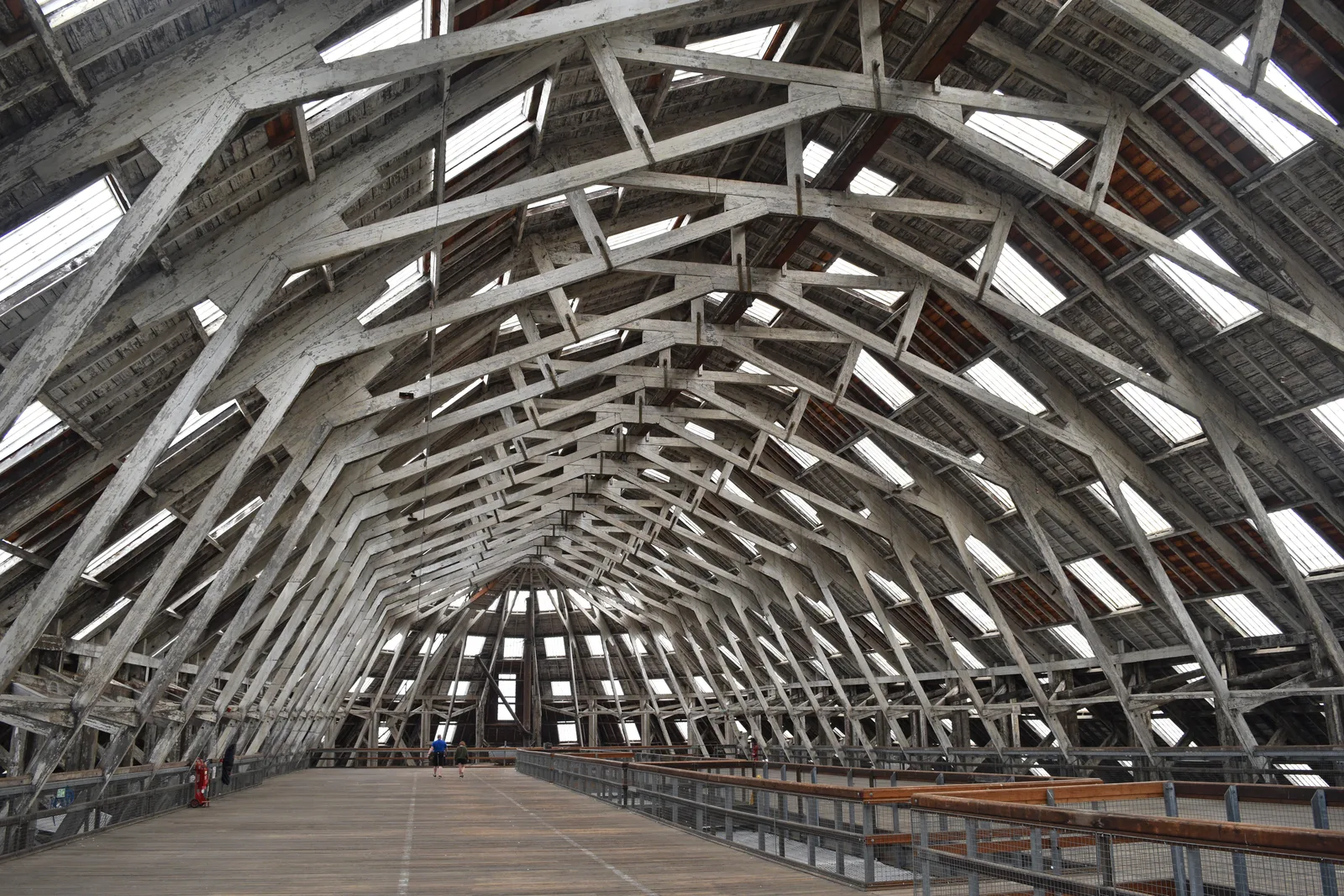

3 Slip: The Big Space is included with a Historic Dockyard admission ticket during advertised opening. Use the visitor entrance via Western Avenue, not the historic Main Gate off Dock Road. The operator describes stairs and a lift to the upper level; check its individual access guide and live closure notices. Seasonal winter closure is listed from 16 November 2026.
Check the official visitor information ↗ · checked 2026-10-07
Use public paths and visitor areas. Do not enter unstaffed tunnels, shafts, railway land or restricted property.
Advice before you visitInformation checked 2026-10-07. Historic England listing, Kent County Council designation link and dockyard operator history, gallery, calendar and notices checked. No site visit or direct operator confirmation.
One structure with two names
The official catalogue calls this scheduled monument No. 3 Boat Store. Kent’s Historic Environment Record explicitly connects it to the separately listed Number 3 Slip Cover. That link establishes why the boat-store name and today’s 3 Slip visitor attraction refer to the same place.
The Dockyard Trust dates the slip to 1836 and the timber cover to 1838. Its original purpose was to protect an unfinished wooden ship from weather. When ships outgrew the slip, an upper floor was added in 1904 to store boats. The large roof survived the change of use.
- Scheduled monument: Chatham Dockyard, No 3 Boat Store (1003379) ↗ · reviewed 2026-10-07
- History and Buildings: No. 3 Covered Slip ↗ · reviewed 2026-10-07
- Number 3 Slip Cover (NHLE 1378591) ↗ · reviewed 2026-10-07
A gallery inside the former workplace
The operator advertises a collection of large objects inside the building and includes entry with dockyard admission. Visitors can reach the upper level by stairs or lift to see the roof more closely. The precise arrangements, lift availability and any temporary closures should be checked with the operator.
The visitor entrance is approached through Western Avenue. The historic Main Gate is reserved for tenants and residents. Stay within signed gallery routes; the map point identifies the historic structure rather than a ticket office or entrance.
- 3 Slip: The Big Space ↗ · reviewed 2026-10-07
- Opening Times and Directions ↗ · reviewed 2026-10-07
- Site Notices and Closures ↗ · reviewed 2026-10-07
What we still need to check
The identity is supported by the council’s explicit designation link. Its older scheduling summary uses 1837, while the detailed listed-building account and operator date the cover to 1838. Historic England calls the Seppings design attribution probable. Present lift operation and day-specific entry have not been checked in person.
Sources for the visiting information
- 3 Slip: The Big Space ↗ · reviewed 2026-10-07
- Opening Times and Directions ↗ · reviewed 2026-10-07
- Site Notices and Closures ↗ · reviewed 2026-10-07
About the original record
This place is recorded by Historic England / Planning Data. The details below include the original description of its building or site type.
Place details
- Category
- Industrial relics
- Building or site type (original wording)
- Chatham Dockyard, No 3 Boat Store
- Period or date
- Slip built 1836; timber cover 1838; boat-store floor added 1904
- Current condition
- Not checked in person
- Heritage protection
- Scheduled monument
- Date protection was granted
- Not given
- Nearby town
- Chatham (approximate)
- County named in the original record
- Not supplied
- Current county or council area
- Medway
- Nation
- England
- Original record number
- 1003379
- Coordinates
- 51.396427, 0.5272 (reference point, not an entrance)
- Heritage data checked
- 2026-09-13
- Source last updated
- 2026-08-28
- Visitor information checked
- 2026-10-07
We checked the downloaded heritage record on 2026-09-13. We have not visited or inspected the site. The map point may refer to a whole site, one structure or a location where little remains.